Shingle vs Metal Roofs for Northwest Harris County Homes
It is the most common question we get on a roof replacement visit: should this house go back with shingles, or is metal worth the money? There is no universal answer, but there is a right answer for a given house, budget and length of stay. This page compares the two honestly for our climate here in Tomball, Cypress and Spring: brutal summer heat, heavy rain, real hail risk and hurricane-season wind.
The Short Version
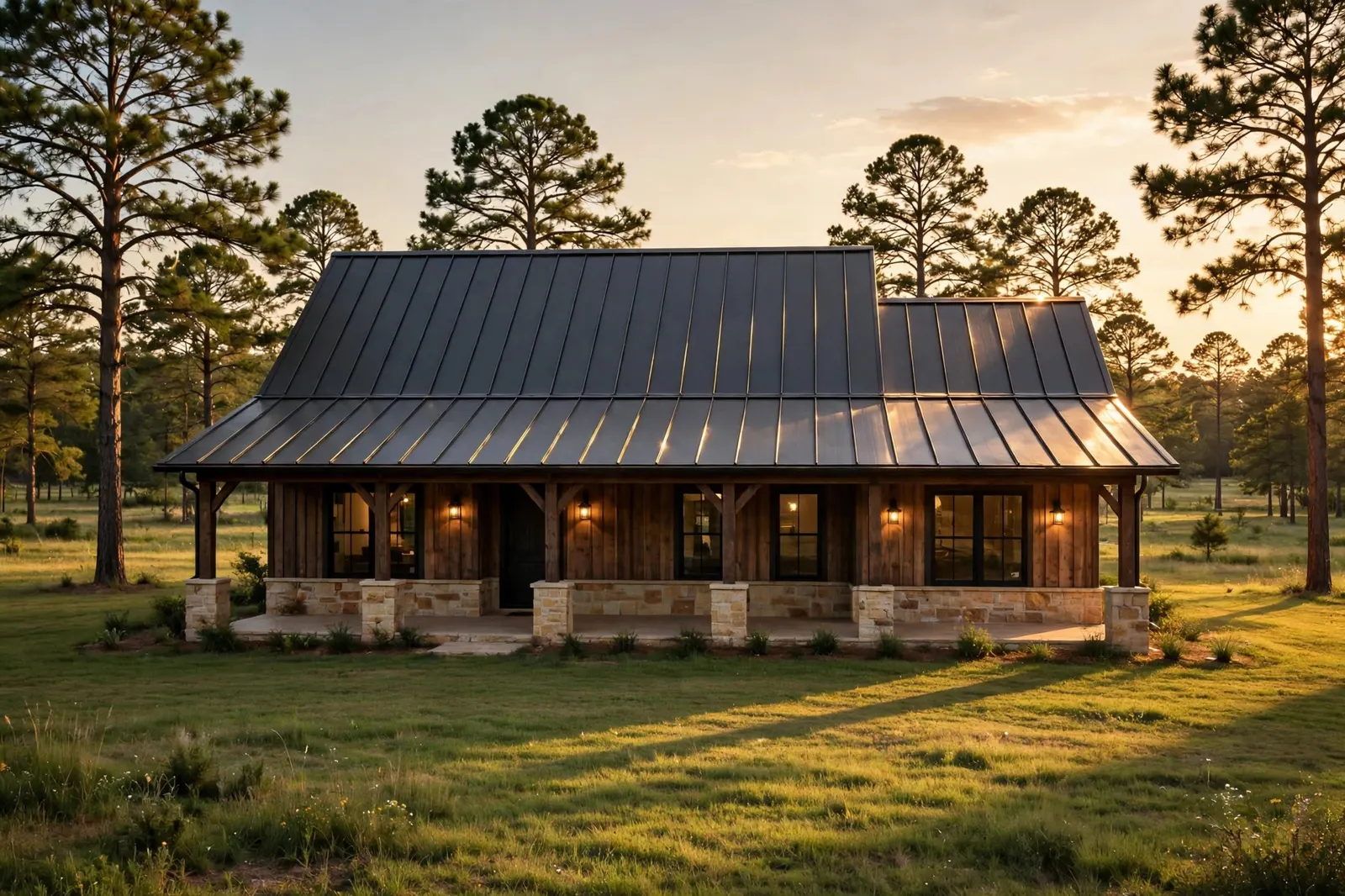
Shingles cost far less up front and suit nearly every home and HOA. Metal costs roughly double to triple per square, lasts roughly twice as long, shrugs off wind better, and can dent cosmetically in hail. If you will be in the house for decades and the budget allows, metal often wins on lifetime math. If you may move in five to ten years, or the budget is spoken for, good architectural shingles are the sensible roof. Everything below is the detail behind that summary.
Cost
Installed planning ranges in this market:
- Architectural asphalt shingles: commonly $450–$700 per square (100 square feet), all-in for tear-off and replacement.
- Standing seam metal: commonly $950–$1,600 per square, with exposed-fastener metal panels below that band and heavier gauges above it.
On a typical home with 22–26 squares of roof, that is roughly $10,000–$18,000 for shingles against $21,000–$40,000 for standing seam metal. Metal's price buys material longevity and a different failure profile, not a proportionally better roof on day one. Both keep the rain out when they are new.
Lifespan in This Climate
Manufacturer ratings assume gentler weather than ours.
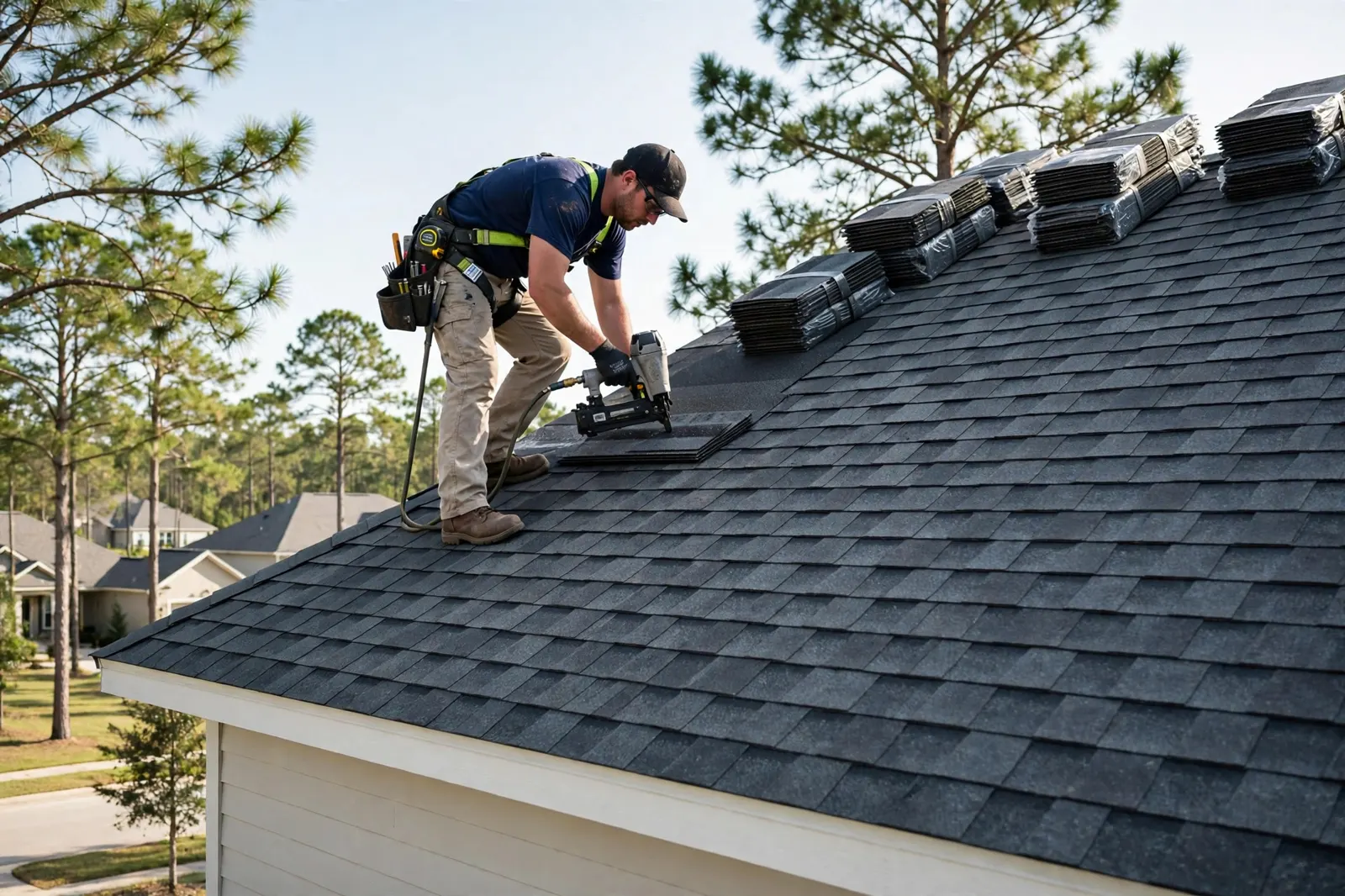
- Architectural shingles are commonly rated 25–30 years. In northwest Harris County heat, with attic temperatures baking them from below, a realistic service life is closer to 15–25 years, depending on ventilation, shade and shingle quality.
- Metal roofing realistically serves 40 years and beyond. Its enemies here are not wear but installation errors and eventual fastener and sealant aging on exposed-fastener systems. Standing seam, with hidden fasteners, avoids most of that.
Ventilation matters more than material for the first number. A poorly vented attic shortens any roof's life, and it is one of the first things we check before quoting a replacement.
Hail and Wind
Hail: Shingles lose granules and can crack or bruise under large hail, and the damage often matters most at claim time. Impact-resistant shingles rated Class 4 are worth considering here and some insurers recognize them. Metal does not crack, but it dents. Most hail dents on metal are cosmetic, though on a visible front slope, cosmetic is not a small thing to the person who paid for the roof.
Wind: This is metal's clearest win. Standing seam panels are mechanically locked together and properly installed systems carry very high wind ratings, which matters in a region that takes hurricane remnants and violent spring storms. Architectural shingles perform well when they are new, fully sealed and correctly nailed, but their wind resistance fades as sealant bonds age, which is exactly when the big storm tends to arrive.
Heat and Energy
Both roofs sit over the same hot attic, and ventilation and radiant heat matter more than surface material alone. That said, metal has a real edge: light-colored and coated metal reflects more solar heat than dark asphalt, and metal cools quickly after sunset instead of holding heat like shingles do. In practice, metal owners here tend to see modest cooling relief, shingle owners get more from attic ventilation and insulation upgrades. We would rather sell you honest ventilation work than promise an energy transformation from either material.
Maintenance
Shingles ask for periodic attention: replacing storm-lifted pieces, resealing exposed fasteners and flashing points, clearing debris from valleys, and moss or algae treatment on shaded slopes. None of it is expensive individually; all of it matters.
Metal asks for less, less often: periodic checks of sealant at penetrations, fastener inspection on exposed-fastener systems, and keeping debris off the surface so moisture does not sit against the finish. A metal roof neglected for thirty years still fails at its penetrations first, just like a shingle roof.
HOA and Appearance Notes
Much of Cypress and Spring lives inside master-planned communities with architectural rules. Many HOAs require approval for any roofing change, and metal, especially certain profiles and colors, may be restricted or need a variance even when shingles in a new color sail through. Check before you fall in love with a standing seam look: we can tell you what we typically see approved in communities like Bridgeland, Towne Lake and Gleannloch Farms, but your HOA's written guidelines are the deciding document.
Appearance cuts both ways. Metal gives a house a crisp, deliberate look that suits farmhouses, modern builds and the rural edges of Tomball. On a traditional brick two-story in an established subdivision, architectural shingles in a weathered tone usually look like they belong, because they are what the street was designed around.
How to Choose
- Choose shingles if your budget is firm, you may sell within a decade, your HOA favors the traditional look, or the house needs other work the savings can fund.
- Choose metal if this is your long-term home, you want the last roof you buy for decades, wind performance matters most to you, and the budget survives the honest number.
- Either way, insist on the things that matter more than material: proper tear-off, sound decking, real flashing work, ventilation corrected, and a crew that photographs the job.
We are glad to run the numbers both ways on your actual roof, with the same inspection photos in front of us. Call (281) 555-0100 and we will show you what each option looks like on your house, not on a brochure house.
Frequently Asked Questions
Is metal really worth double the cost?
Only if you collect the second half of its lifespan. Spread over 40-plus years, metal can cost less per year than two shingle roofs. If you sell in eight years, the next owner collects that value, not you, and shingles were the smarter spend. It is arithmetic about your timeline, not a quality verdict.
Will a metal roof be loud in Texas rain?
On a modern residential installation over solid decking, underlayment and an insulated attic, no. The rain-on-a-barn sound comes from metal over open framing. A properly built-up metal roof assembly sounds about like a shingle roof in the same storm.
Can metal go over my existing shingles?
Sometimes it is allowed, but we generally recommend tear-off. Going over shingles hides decking problems, adds weight and can telegraph the old roof's unevenness through the panels. A replacement done once, down to sound deck, is the version we will stand behind in a conversation about your home.
Do insurers treat the two differently?
Often, yes. Some insurers offer considerations for impact-resistant shingles or metal, and some treat cosmetic hail damage to metal differently in the policy language. That is a question for your agent with your policy in hand. Our insurance claims guide explains how claims work here, and we are happy to inspect either roof before a storm ever tests it.
Request a Roof Inspection
Tell us what the roof is doing and where. We call back with a plan and an honest read on cost before any work starts. Active leak or storm damage? Call (281) 555-0100 instead, a conversation beats a form when water is moving.
Request a Roof Inspection
Tell us what the roof is doing. We call back with a plan and an honest read on cost before any work starts.