Home › Services › Storm Damage Roof Repair in Tomball, TX
Storm Damage Roof Repair in Tomball, TX
When a Gulf storm rolls up through Harris County, it does not ask permission before it tests your roof. Wind gets under a shingle edge, a pine limb comes down across the ridge, and by the next morning there is a stain spreading on the ceiling. Storm damage roof repair in Tomball TX is the work of sorting out exactly what that storm did, fixing what is broken, and proving all of it with photographs before anyone files a claim.
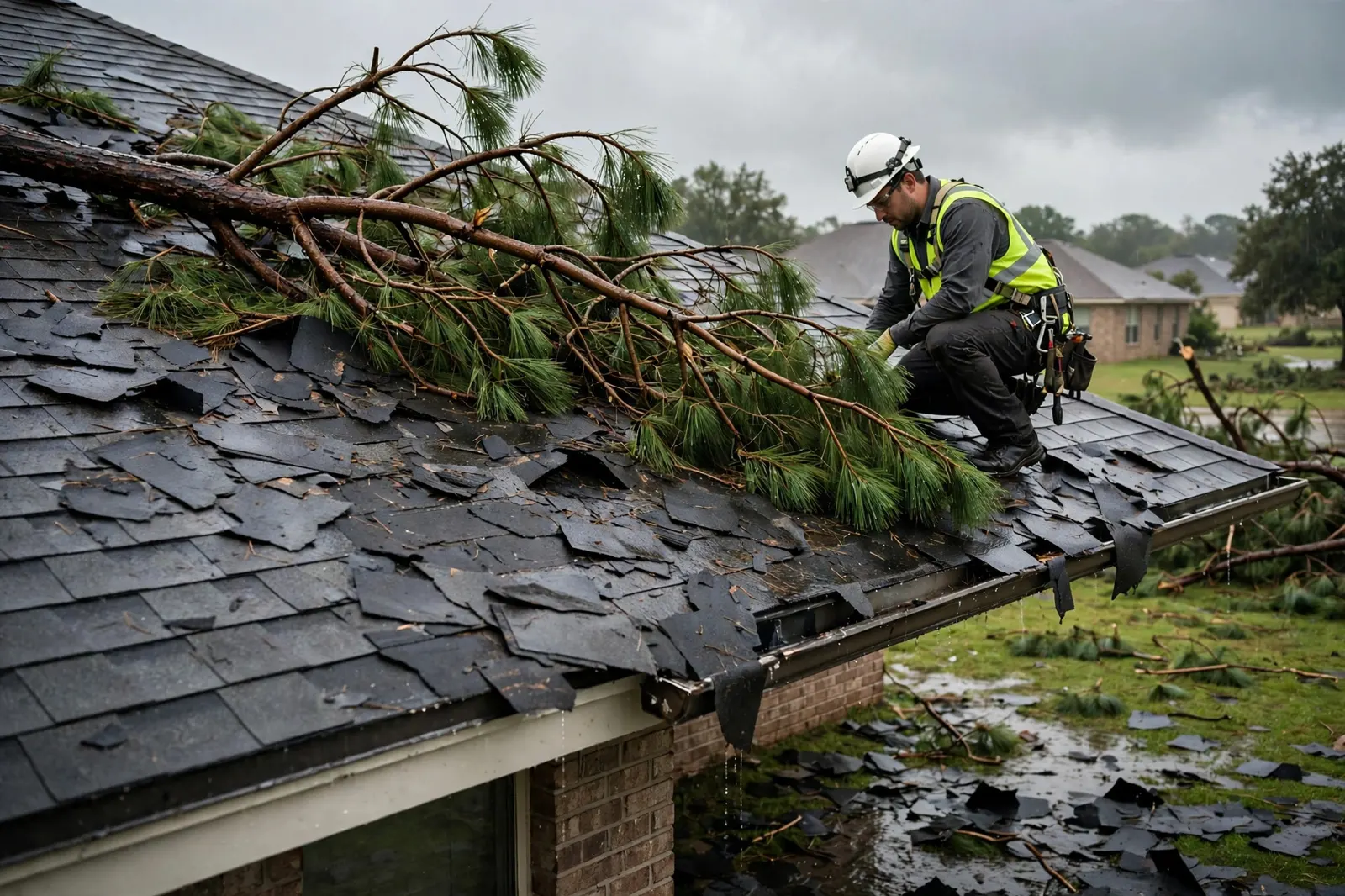
What storm damage actually looks like on a Tomball roof
Most storm damage is not a tree through the living room. It is quieter than that, and it hides. Wind works the edges first: shingles along the eaves and rakes get lifted, their sealant strips break, and the next hard rain drives water sideways under the roof surface. You may never see a shingle in the yard. The damage shows up weeks later as a ceiling stain, and by then the underlayment and decking have been drinking water the whole time.
Then there is the pine problem. Tomball is named for its trees as much as anything, and tall pines overhang a lot of roofs from FM 2920 out to the subdivisions along SH-249. A falling limb does not have to puncture the roof to hurt it. A heavy limb can crack the decking under intact-looking shingles, and that soft spot flexes with every footstep and every heat cycle until the shingles above it fail. We press-test the deck anywhere a limb has landed, because your eyes cannot see that damage from the driveway.
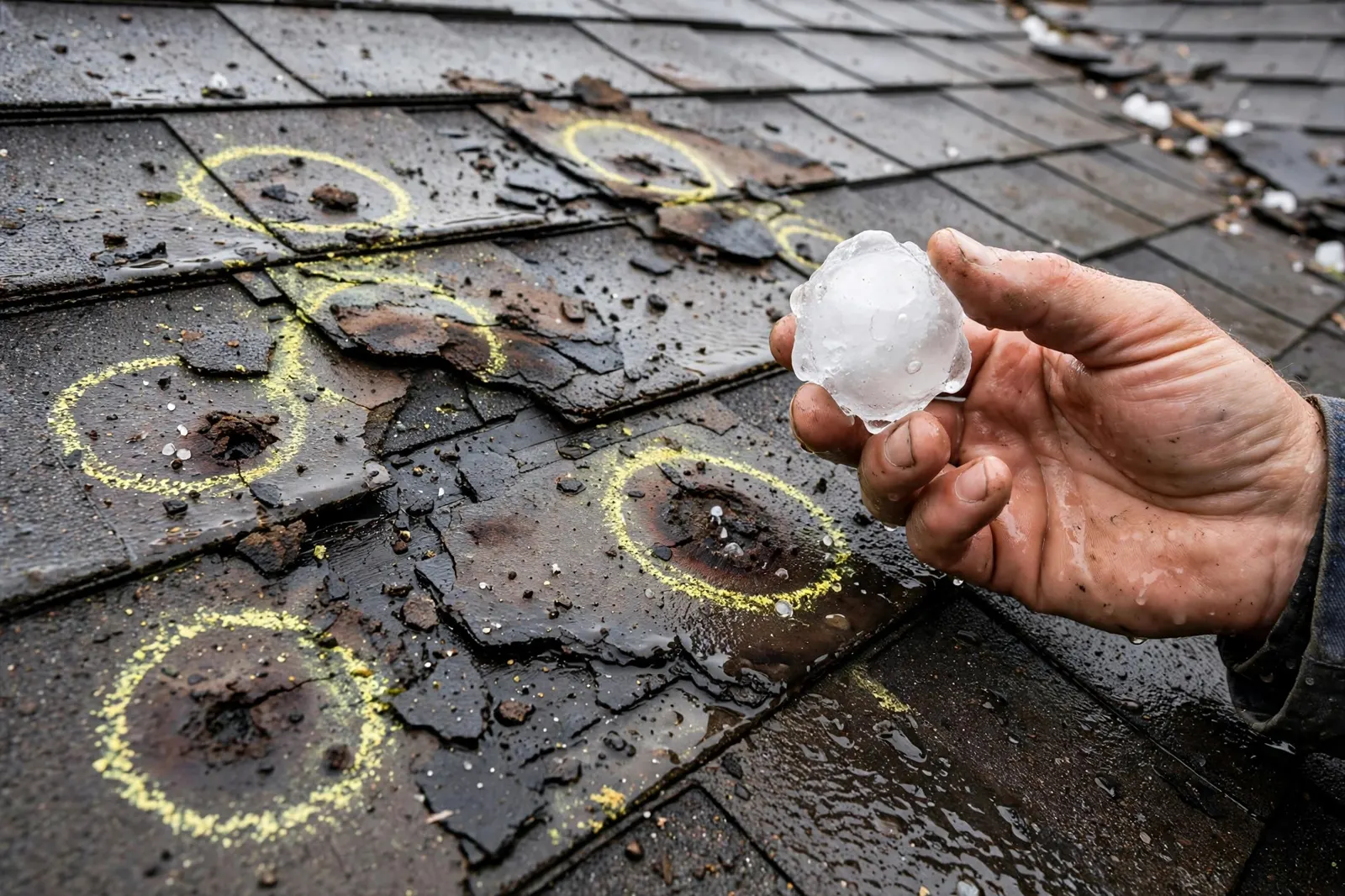
Hail is the third actor, and it gets its own page: hail damage roof repair. The short version is that hail bruises shingles in ways a ground-level look will miss entirely.
How we handle storm damage roof repair in Tomball TX
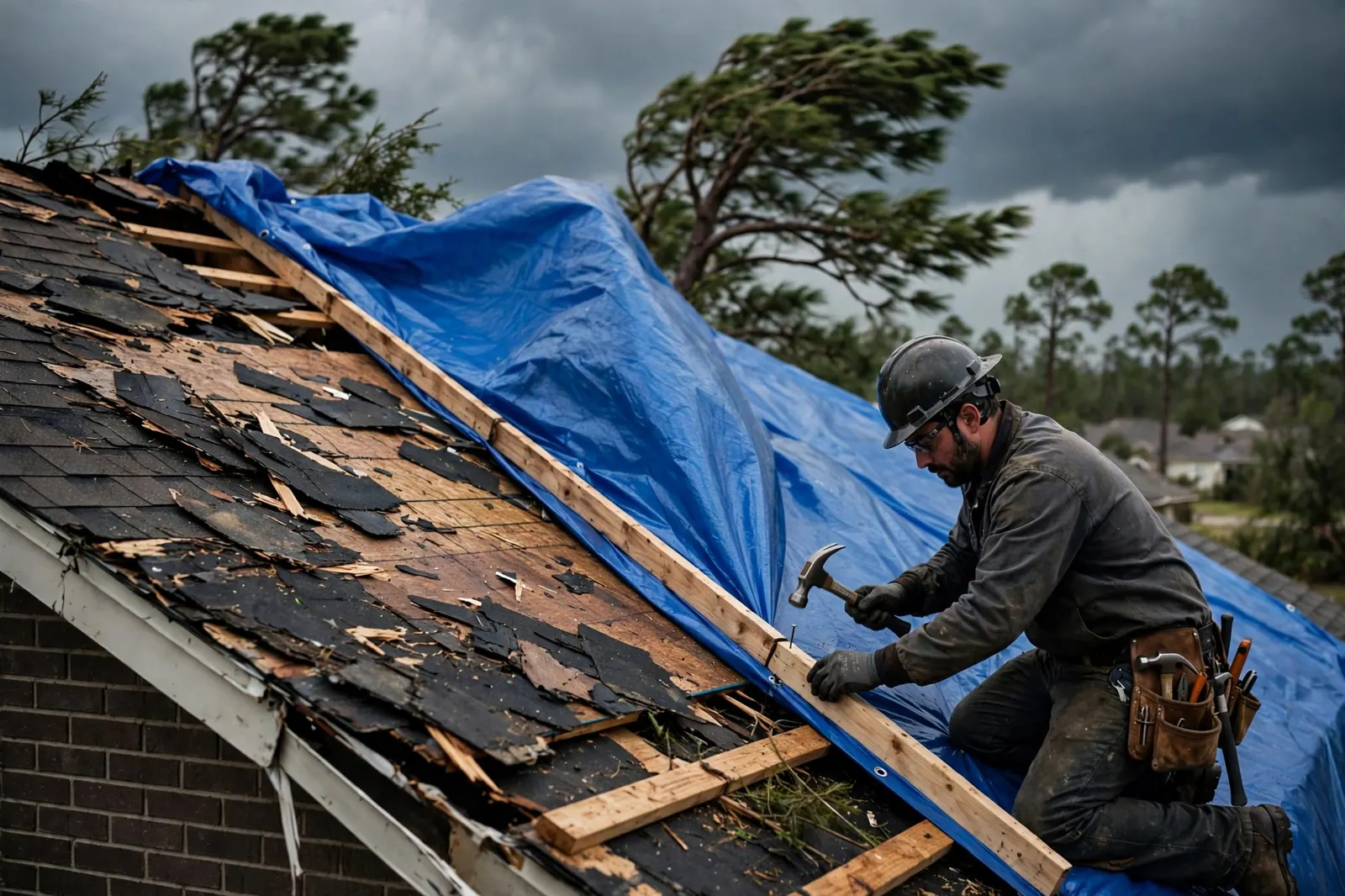
First, we stop the water. If the roof is actively leaking, we tarp or seal the entry point before anything else happens. A dry house matters more than a perfect scope of work.
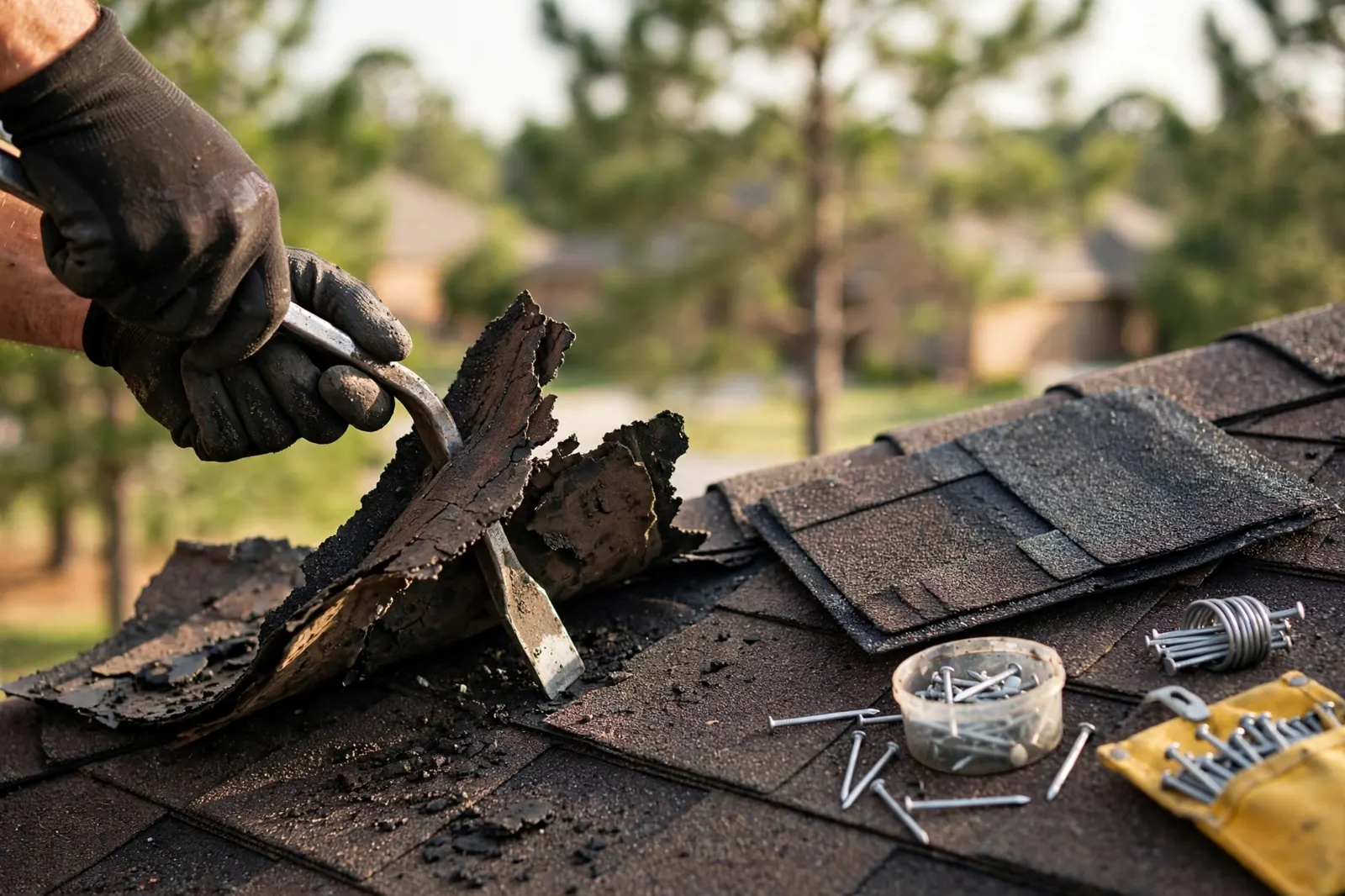
Second, we document. Every damaged slope gets photographed: the lifted shingles, the creased tabs, the cracked vent boots, the limb strike, the granules washed down into the gutters. This documentation is yours. It is what your insurance adjuster needs to see, and it is what protects you if a claim gets questioned later. The Texas Department of Insurance (https://www.tdi.texas.gov/) publishes guidance on filing property claims after a storm, and it is worth a read before the adjuster comes out. We are roofers, not claim consultants, but we will make sure you have a complete photo record to bring to that conversation.
Third, we separate repair from replacement honestly. A storm that took twelve shingles off one slope is a roof repair job, and we will tell you so. A roof where wind has creased shingles across every slope, or where the shingles were already at the end of their life, may be headed toward roof replacement, and we will show you the photos and the reasoning either way. What we will not do is inflate a repair into a replacement because the ticket is bigger.
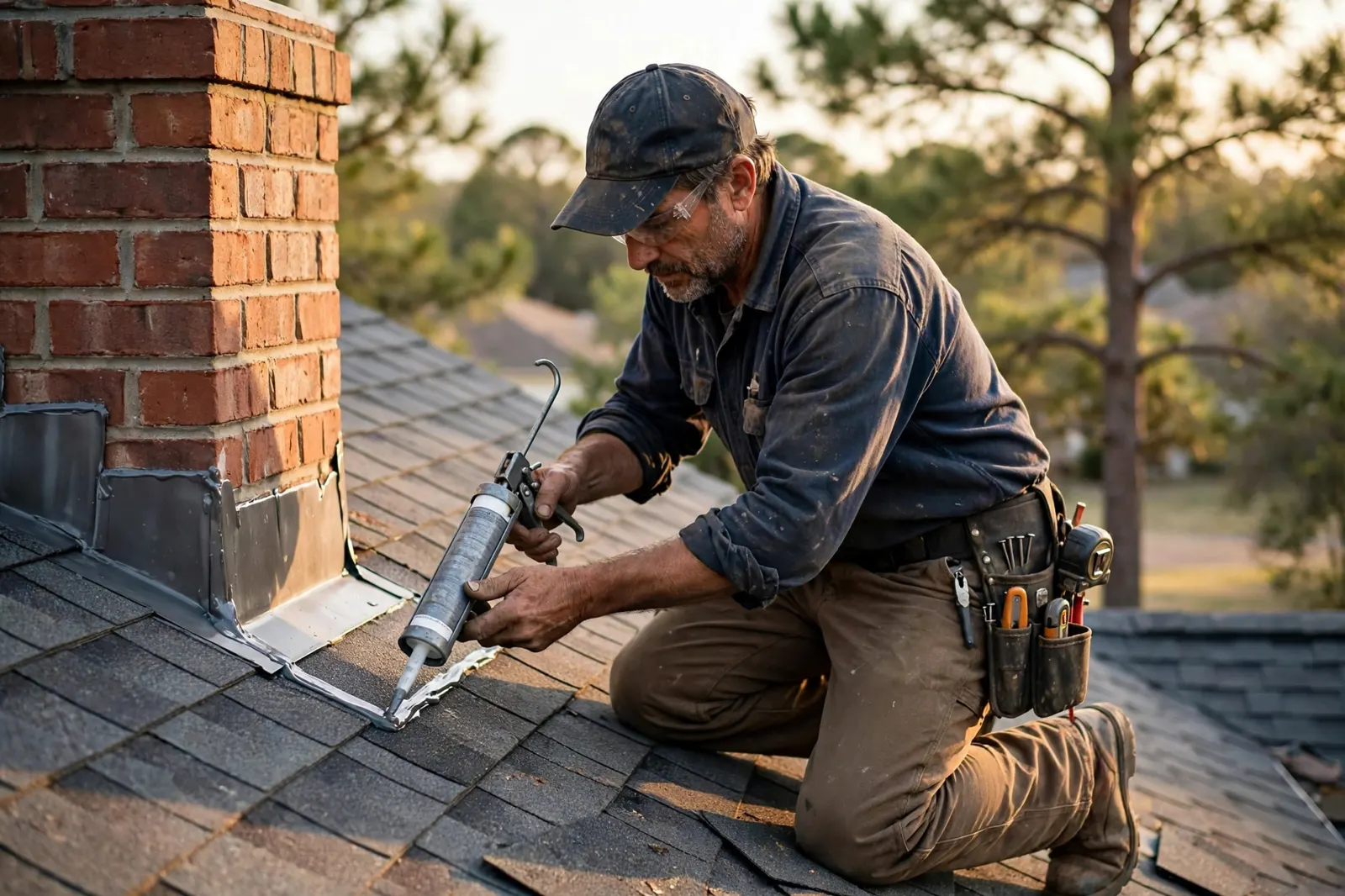
The repair work itself: materials and judgment
A storm repair is only as good as the match and the method. We source shingles that match your existing roof as closely as the market allows, and we show you a sample before we install anything, because a mismatched patch on the front slope is something you will stare at for fifteen years. Where sealant strips have failed across a whole slope, re-sealing by hand is not a real fix; those shingles get replaced, not glued down and prayed over.
Flashing deserves its own sentence. Storms exploit weak flashing at chimneys, valleys and wall transitions, and a lot of post-storm leaks trace back to flashing that was marginal before the wind ever blew. When we open a damaged area, we inspect the flashing inside it, and if it is failing we replace it as part of the repair rather than burying the problem under new shingles.
Valleys take the worst of a Tomball storm because they carry the most water. We check valley metal and woven shingle valleys for splits and lifting after every major wind event we respond to. It is unglamorous work. It is also where the next leak is usually born.
After the repair: what you should watch for
A repaired storm roof should be boring. No new stains, no shingles in the yard after the next blow, no granule piles at the downspouts. If any of that shows up, call us and we will come look, because a repair that fails early is a repair we want to know about.
It is also worth having the roof walked once more before the next spring storm season. Damage compounds: a slope that survived one storm with loosened shingles may not survive the next. A roof inspection after storm season is cheap insurance against finding out the hard way. And if you are trying to budget for what any of this costs, our roof repair cost guide lays out honest ranges for the Tomball area.
Frequently Asked Questions
Will my insurance cover storm damage roof repair?
Wind and hail damage are generally the kind of sudden, accidental loss that homeowners policies are written for, but coverage depends on your policy, your deductible, and the age and condition of the roof. We document the damage thoroughly and meet the adjuster on the roof when we can, but the coverage decision is the insurer's. Read your policy, and check the Texas Department of Insurance site (https://www.tdi.texas.gov/) for how the claim process is supposed to work.
How soon after a storm should I get the roof looked at?
As soon as it is safe to be up there. Some damage, like a leaking puncture, is urgent the same day. Other damage, like wind-creased shingles, will not leak this week but will fail early if it is left alone. A prompt inspection also creates a dated record close to the storm, which matters if you file a claim.
A limb fell on my roof but there is no hole. Is it fine?
Not necessarily. A limb heavy enough to matter can crack or soften the decking under shingles that look untouched. That soft spot is a future leak and a future failed section. Have it press-tested and photographed. If the deck is sound, you will have peace of mind and a dated photo proving it.
 Hail Damage Roof Repair
 Emergency Roof Repair
 Roof Repair
Request a Roof Inspection
Tell us what the roof is doing and where. We call back with a plan and an honest read on cost before any work starts. Active leak or storm damage? Call (281) 555-0100 instead, a conversation beats a form when water is moving.
Request a Roof Inspection
Tell us what the roof is doing. We call back with a plan and an honest read on cost before any work starts.