What Roof Repair Costs in Tomball, TX
If you are searching for roof repair cost in Tomball, TX, you want a number you can plan around before anyone climbs on your roof. This guide gives you one, with an honest catch: the ranges below are planning ranges for common jobs in northwest Harris County, drawn from what these jobs commonly run in this market. They are not our price list, not a quote, and not a promise. Every roof differs in pitch, height, material and damage, and the only way to get a real number for your home is an inspection.
How to Read These Numbers
Roofing is priced partly by the job and partly by the square, which is a unit of 100 square feet of roof area. Small repairs are usually quoted as a flat job price because the labor of getting up there dominates the materials. Replacements are quoted per square because materials scale with roof size.
Every range below assumes a typical single-family home in the Tomball, Cypress and Spring area: one or two stories, a walkable pitch, and asphalt shingles unless metal is named. Steep pitches, three-story access, and roofs with heavy damage underneath the surface push costs toward or past the top of a range. Use these numbers to plan and to compare quotes, then get the real figure from someone standing on your roof.
Minor Repairs and Leak Work
The most common roof repair jobs are small: a failed pipe boot, a few missing shingles, a small flashing leak at a wall or chimney, a lifted ridge cap.
- Minor leak repair: commonly $350–$950 for a single, accessible leak source, including tracing the entry point and sealing or replacing the failed component.
- Pipe boot and vent flashing replacement: commonly $250–$600 per vent, depending on height and pitch.
- Small shingle patch: commonly $300–$700 to replace a limited area of missing or damaged shingles with a close material match.
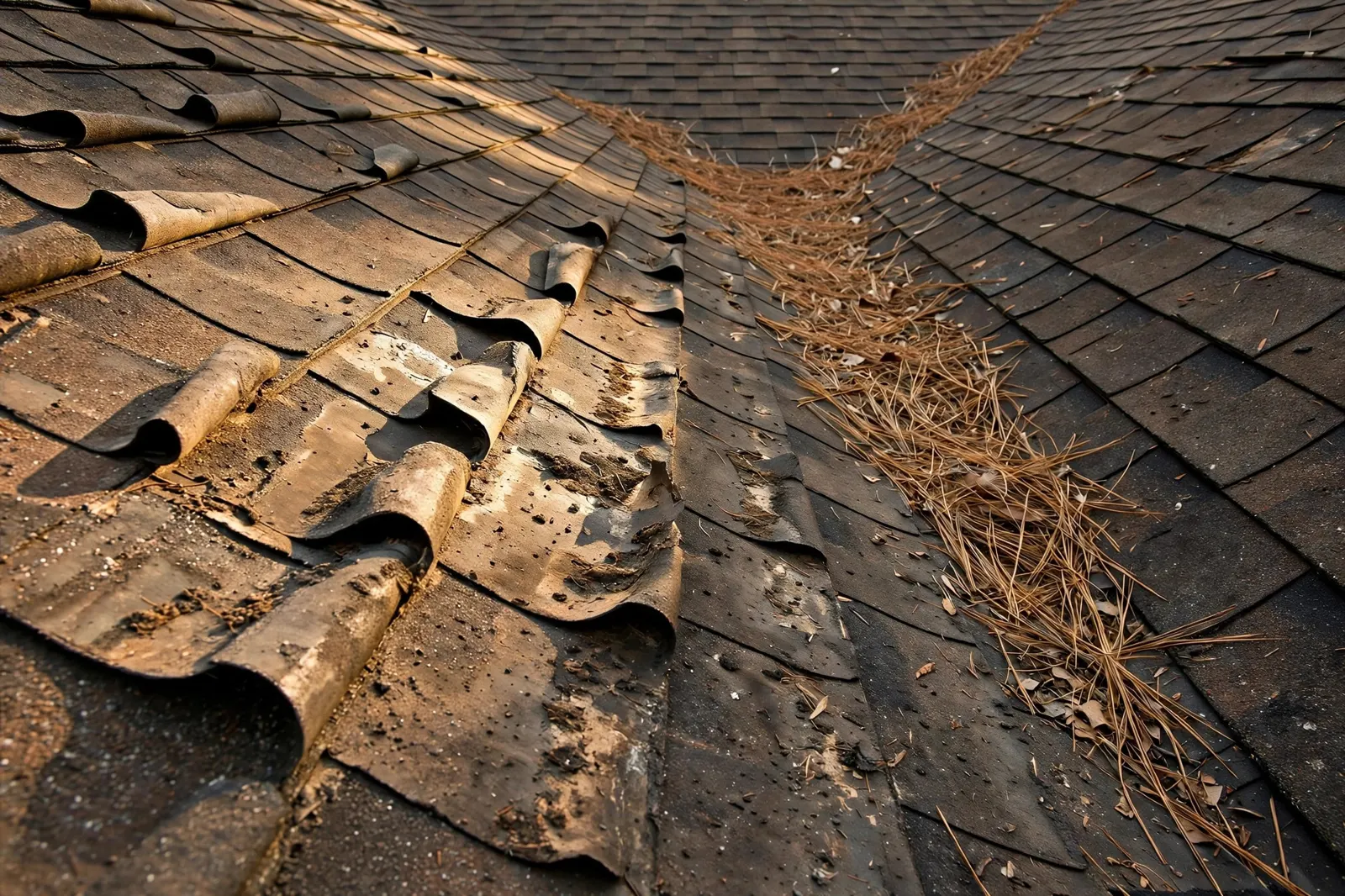
These jobs get more expensive when the leak has been active long enough to rot the decking underneath. Replacing a section of rotted deck adds material and labor, and it cannot be priced until the shingles come up and the damage is visible. Any honest roofer will tell you that up front.
Shingle Replacement and Section Work
When damage covers a larger area, a wind-lifted slope, a limb strike, a whole worn section, pricing shifts to per-square terms:
- Shingle replacement per square: commonly $450–$800 per square installed for architectural shingles on a repair basis. Small sections cost more per square than whole roofs because the setup and tie-in labor is the same whether the section is one square or five.
- Full slope replacement: commonly $1,800–$4,500 for one slope of a typical home, depending on the slope's size, pitch and how the new section must tie into existing roofing.
Matching matters here. On an older roof, new shingles will not match the weathered ones exactly, and on a roof near end of life, a section replacement can be money spent dressing up a roof that needs full replacement soon. We will tell you if we think that is your situation.
Flashing Work
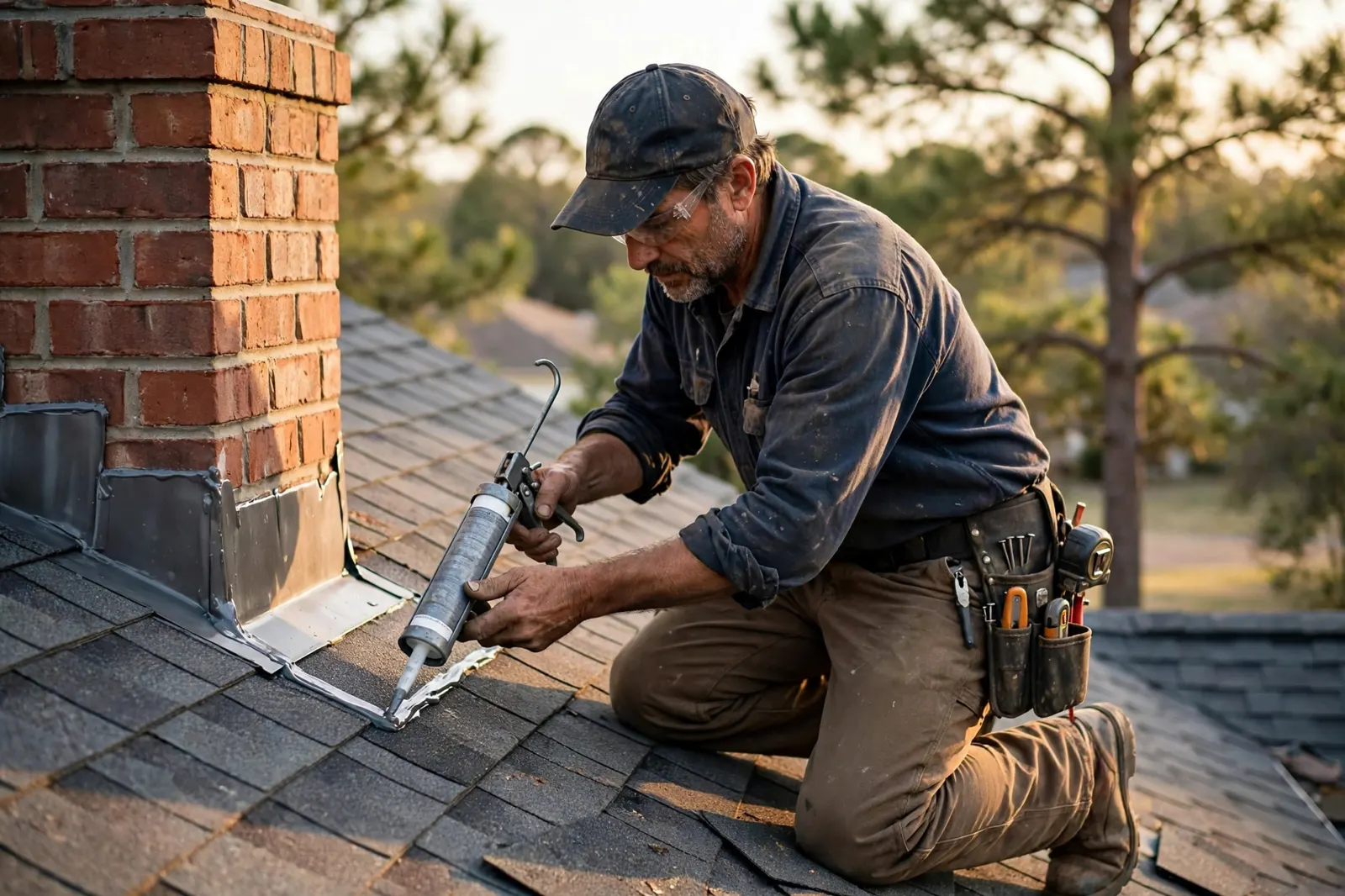
Flashing is the metal work that keeps water out where the roof meets walls, chimneys and valleys, and it is the most common leak source we repair.
- Chimney flashing rebuild: commonly $600–$1,500, depending on chimney size, height and whether the mortar and counter-flashing need full replacement.
- Valley repair or replacement: commonly $450–$1,200 per valley section, higher where the valley is long or the surrounding shingles must be woven back in.
- Wall and step flashing repair: commonly $300–$900 for a single wall run.
Flashing is where cheap repairs go to die. A tube of sealant on failed flashing costs little and lasts a season. Properly rebuilt flashing costs more and lasts as long as the roof around it. When you compare quotes, ask whether flashing is being replaced or smeared, because that difference explains most low bids.
Partial Re-Roofing
A partial re-roof replaces one or more full sections down to the deck while leaving sound sections in place. It makes sense when damage or wear is concentrated: one storm-beaten slope, one sun-cooked south face.
- Partial re-roof: commonly $2,500–$7,500, depending on how many squares are involved, the pitch, and how the new work ties into the old.
The honest limit: partial re-roofing on a roof that is failing everywhere just spreads the full replacement cost across several years at a higher total. It is the right call for concentrated damage on a healthy roof, and the wrong call for a roof that is worn out across all slopes.
Full Roof Replacement
When repair money stops making sense, roof replacement is priced per square, all-in for tear-off, underlayment, new material, flashing and ventilation work:
- Architectural shingle replacement: commonly $450–$700 per square. On a typical 2,000 square foot home with roughly 22–26 squares of roof, that lands around $10,000–$18,000 in total.
- Standing seam metal replacement: commonly $950–$1,600 per square, putting the same home around $21,000–$40,000. Lower-cost metal profiles exist below that band and premium systems run above it.
For a fair side-by-side of what that extra metal money buys in this climate, see our shingle vs metal comparison. Replacement totals move with roof complexity more than with house size: cut-up rooflines with many valleys and penetrations cost more per square than simple gable roofs.
What Actually Drives the Price
Six factors explain nearly every difference between quotes:
1. Roof size and complexity. More squares and more junctions mean more material and more skilled labor. 2. Pitch and height. Steep and tall roofs are slower and require more safety setup. 3. Hidden damage. Rotted decking and saturated underlayment only show themselves during tear-off. 4. Material choice. Shingle grade, metal gauge and profile all change the per-square figure. 5. Access. Tight lots, landscaping and two-story rear slopes slow everything down. 6. Scope honesty. A low quote that excludes flashing, underlayment or ventilation work is not cheaper, it is smaller.
What an Inspection Gives You
An inspection turns all of these ranges into one real number for your roof. When we inspect, we photograph the damage and the roof's overall condition, identify the actual leak source rather than the stain, and give you the options in writing: repair, repair and monitor, or replace, with the reasoning attached to each.
That is the only kind of number you should sign anything against. If a contractor will quote you from the street or from satellite photos alone, treat the figure as marketing, not measurement. Call (281) 555-0100 and we will put a real price on your real roof.
A Worked Example
To make the ranges concrete, take a common Tomball scenario as a planning exercise, not a quote. A two-story home, about 24 squares of roof, develops a leak over the garage. The inspection finds a failed chimney flashing and four squares of heat-worn shingles around it, with the rest of the roof sound.
Using the ranges above, a homeowner might plan on the chimney flashing rebuild ($600–$1,500) plus a small section replacement (four squares at repair-basis pricing, roughly $1,800–$3,200), landing somewhere around $2,400–$4,700 all-in for planning purposes. The same stain on a roof that turns out to be worn across every slope is a different conversation entirely: full shingle replacement on 24 squares at $450–$700 per square, or $10,800–$16,800.
Same stain, two very different budgets. That gap is exactly why the inspection, not this page, sets your real number.
Frequently Asked Questions
Why will nobody give me an exact price over the phone?
Because the price lives on the roof. The same ceiling stain can be a $400 pipe boot or a $4,000 decking and section job, and nobody can tell which from inside the house. Any exact quote given without an inspection is a guess designed to get a salesperson through your door.
Is it cheaper to repair or replace an older roof?
Repair is cheaper today almost every time. The real question is total cost over the next five years. A sound roof with one failure is a repair. A worn-out roof repaired four times costs more than one replacement, and leaks keep risking interior damage in between. The inspection photos will show you which roof you own.
Does insurance cover roof repair costs?
Insurance generally responds to sudden storm damage, not to age and wear. If a storm event damaged your roof, our insurance claims guide walks through how Texas claims work, step by step. Wear, aging and long-term leaks are normally the homeowner's cost, which is exactly why catching them early matters.
Do your prices match the ranges in this guide?
Our quotes are based on your roof's actual size, pitch, material and damage, so a final figure can land inside these ranges or outside them, particularly on steep or complex roofs. What we promise is that the number comes from an inspection, with photos and a written scope, so you can compare it line by line against anyone else's.
Request a Roof Inspection
Tell us what the roof is doing and where. We call back with a plan and an honest read on cost before any work starts. Active leak or storm damage? Call (281) 555-0100 instead, a conversation beats a form when water is moving.
Request a Roof Inspection
Tell us what the roof is doing. We call back with a plan and an honest read on cost before any work starts.