How Roof Insurance Claims Work in Texas
After a serious storm rolls through northwest Harris County, the same question lands on our phones for weeks: how does a roof insurance claim actually work? This page walks through the process in Texas, step by step, in plain language. We are roofers, not lawyers or public adjusters, so nothing here is legal advice. It is the practical sequence we watch play out on roofs in Tomball, Cypress and Spring every storm season.
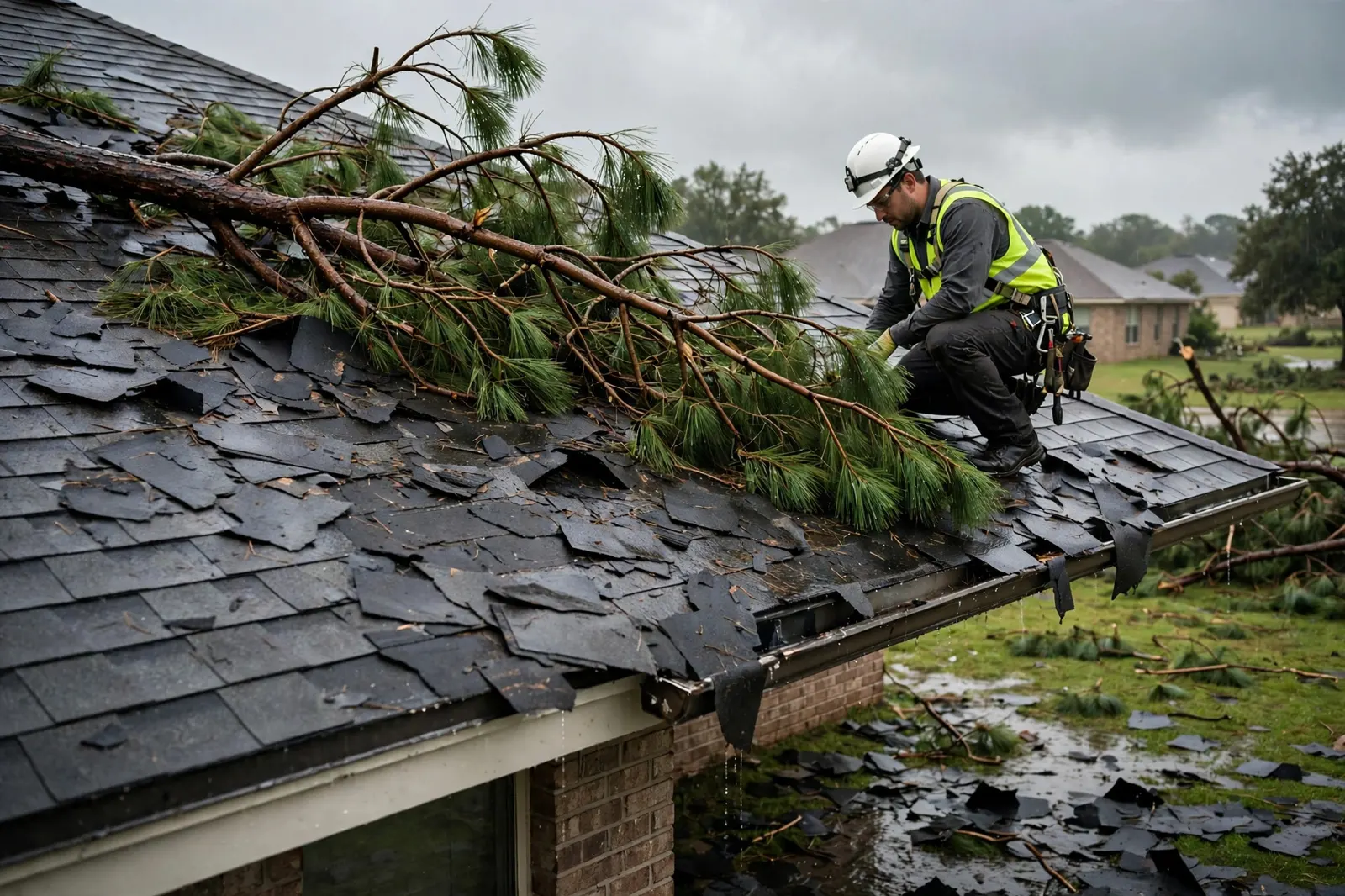
Step 1: Document the Damage Before Anything Changes
Claims run on evidence, and evidence disappears. Shingles get tarped, debris gets hauled off, and the storm that caused the damage becomes last month's weather. As soon as it is safe, document what the storm did:
- Photograph the roof from the ground on all sides, plus any shingles, metal or tree debris in the yard.
- Photograph interior stains, drips and damaged ceilings or belongings.
- Note the date and approximate time of the storm. Your insurer will match it against weather records.
- Keep any emergency repair receipts. Reasonable steps to prevent further damage, like tarping, are generally expected of you, and the receipts matter.
Do not climb on a wet or damaged roof yourself. That documentation is part of what we do on an inspection visit, including the close-up photographs an adjuster will want to see.
Step 2: Know Your Policy Basics Before You File
Two numbers shape every Texas roof claim. The first is your deductible, and on many Texas policies the wind and hail deductible is not a flat dollar figure. It is commonly set at 1–2% of the home's insured value, so on a home insured for $400,000, the deductible is often $4,000–$8,000. That surprises a lot of homeowners, and it means a small repair may cost less than filing at all.
The second is whether the roof is covered at replacement cost or actual cash value, and whether the policy carries a roof payment schedule that reduces payouts as the roof ages. Older roofs are where these provisions bite. The Texas Department of Insurance explains policy terms and consumer rights on its site at tdi.texas.gov, and your own policy declarations page has your specific numbers.
Step 3: File the Claim
You file with your insurer or agent, usually online or by phone. You will get a claim number, and the insurer assigns an adjuster. Filing promptly matters: most policies require timely notice of damage, and storms are dated events, so a leak you report months later invites an argument about when it happened.
One judgment call belongs to you: whether to file at all. If the damage is minor and the repair cost is near or below your deductible, paying out of pocket can make more sense. This is where an honest inspection helps before you file: if we look at your roof and the repair is a few hundred dollars, we will tell you that plainly, claim or no claim.
Step 4: The Adjuster Visit
The adjuster inspects the roof, takes their own measurements and photographs, and compares what they find against the storm record and your policy. This visit decides most claims, so preparation matters.
We can be there. When we meet an adjuster, we walk the roof with them, point to the documented damage, show our photographs, and make sure nothing we found gets missed: creased shingles on the back slope, the damaged flashing, the test square results. We do this respectfully and factually. Adjusters are doing a job, and a calm, evidence-based walkthrough serves your claim better than any argument.
Step 5: Scope, Deductible, ACV and RCV
If the claim is approved, you receive a scope of work: the insurer's line-item estimate of what the covered repair or replacement should cost. What you actually get paid, and when, depends on the two terms every Texas homeowner should understand:
- ACV (actual cash value) is the roof's value today, after depreciation. An older roof has less remaining life, so its ACV payment is lower than the cost of a new roof.
- RCV (replacement cost value) is what a replacement roof costs at today's prices. On an RCV policy, the insurer typically pays the ACV amount first, then releases the withheld depreciation after the work is completed and documented. That second payment is why final invoices and completion photos matter.
Your deductible is subtracted from the settlement, and it is paid by you to your contractor as part of the job cost. Be wary of any roofer who offers to waive, absorb or rebate your deductible. That arrangement is a serious legal and ethical problem in Texas, and it is not something we will ever offer.
If the scope comes back short of the real damage, there is a supplement process for documenting additional items. If a claim is denied, you have the right to ask for the reasoning in writing, request a re-inspection, and complain to the Texas Department of Insurance if you believe the claim was handled unfairly.
What We Do, and What We Will Not Do
We inspect roofs, document storm damage thoroughly, tarp roofs that are open, meet adjusters, and complete approved work to the scope with photos at every stage. Our roof repair and storm documentation work exists so your claim file is built on evidence instead of sales talk.
We will not promise that a claim will be approved, tell you damage exists where it does not, inflate a scope, or touch your deductible. If the evidence on your roof does not support a claim, we will tell you that too, even though it costs us a job. The full picture of what repairs and replacements cost out of pocket is in our roof repair cost guide, which is the right planning tool when insurance is not part of the picture.
Frequently Asked Questions
Will filing a claim raise my premiums?
That depends on your insurer, your history and the type of claim. We are roofers, not your agent, so we will not guess at your rates. What we can do is inspect first, so you know whether the damage justifies a claim before you file one.
My claim was denied. Is that the end of it?
Not necessarily. You can request the denial reasoning in writing, ask for a re-inspection with your documentation in hand, and file a complaint with the Texas Department of Insurance at tdi.texas.gov if you believe the claim was mishandled. A denial based on wear and age, though, is usually accurate: insurance covers sudden storm events, not old roofs wearing out.
Can you just cover my deductible to win the job?
No. Waiving or absorbing a deductible is not something we will do, for your protection as much as ours. Any contractor offering it is putting your claim and your money at risk. The deductible is part of the job cost on every legitimate quote, including ours.
How long does the whole process take?
It varies widely by insurer and storm volume. After a major event, adjuster schedules can stretch for weeks. What you control is the evidence: documented damage, a filed claim with a date, and a roofer who shows up to the adjuster visit. Call (281) 555-0100 and we will start with the inspection.
Request a Roof Inspection
Tell us what the roof is doing and where. We call back with a plan and an honest read on cost before any work starts. Active leak or storm damage? Call (281) 555-0100 instead, a conversation beats a form when water is moving.
Request a Roof Inspection
Tell us what the roof is doing. We call back with a plan and an honest read on cost before any work starts.