Home › Areas › Roof Repair in Spring, TX
Roof Repair in Spring, TX
Most roof repair in Spring, TX starts with the trees. This is an older, heavily wooded suburb, and the roofs here live under oak and pine canopy that drops limbs, holds shade and keeps debris sitting on shingles for months at a time. We are the crew that comes out, climbs up, and tells you honestly what the canopy, the weather and plain age have done to your roof.
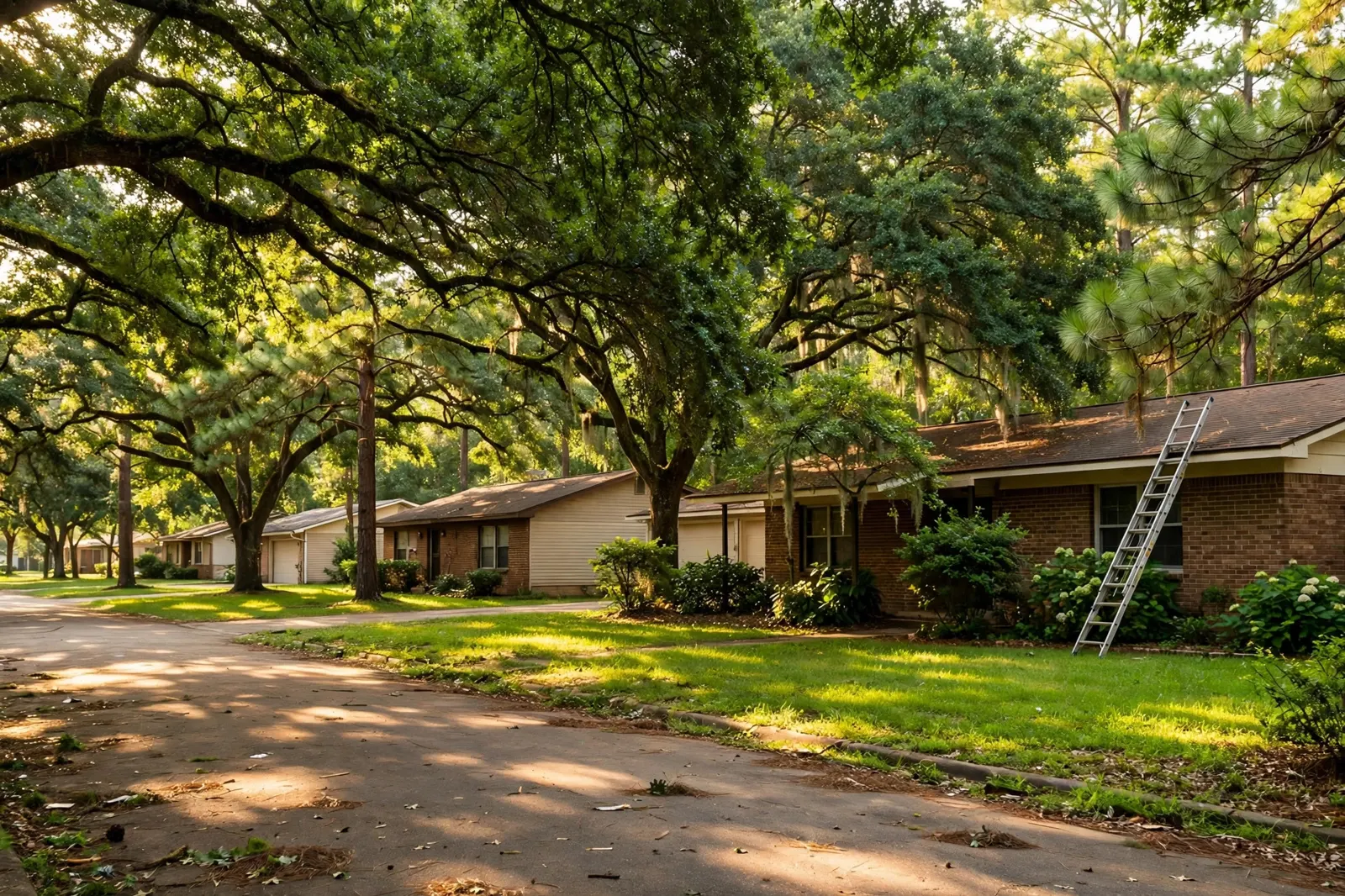
Spring's Older Roofs and Heavy Tree Canopy
The defining feature of Spring housing is the canopy. Mature oaks and tall pines shade entire streets in neighborhoods like Gleannloch Farms, Champion Forest, Cypresswood and the subdivisions around Spring Creek. Shade is wonderful for a yard and hard on a roof. Shaded shingles stay damp after rain, grow algae and moss at the edges, and age unevenly: the sunny south slope wears out years before the shaded north slope.
Falling debris is the second issue. Pine needles and oak leaves blanket valleys and gutters, holding moisture against the roof surface and damming water where it should flow off. Limbs rub shingles in the wind, and in a serious storm a falling limb is one of the most common causes of punctured decking we see in Spring. Homes near Old Town Spring, the historic district around the old railroad yard, add another layer: older construction, older flashing methods, and roofs that have often been repaired many times by many hands.
The school districts tell the same geography story: Klein ISD covers much of the west and north side, Spring ISD the east, and the housing on both sides shares the same pattern of established homes under big trees. Even the newer pockets, like the growth out toward the ExxonMobil campus off I-45, are being built under and around the same pine woods.
What Goes Wrong With Spring Roofs
Debris dams top the list. A valley full of pine needles can push rain sideways under shingles that are otherwise in good shape, and the leak shows up inside far from the actual entry point. This is why our roof repair work in Spring always starts with clearing and inspecting the valleys instead of guessing from the stain.
Limb damage comes next: punctures, cracked shingles under fallen branches, and gutters torn loose by debris weight. Then there is the age factor. Many Spring roofs are on their second or third layer of repair history, with mismatched shingles, old tar patches that have cracked open, and flashing that was sealed instead of properly rebuilt. Each of those shortcuts works for a while, and each one eventually becomes the leak.
Shade-driven growth rounds it out. Algae streaking is mostly cosmetic, but moss and lichen at shingle edges lift them over time, and constant damp shortens the life of the whole slope. None of this means every Spring roof needs replacing. It means the inspection has to be honest about which problems are maintenance, which are repairs, and which mean the roof is done.
Roof Repair and Replacement Services in Spring
The calls we get most in Spring:
- Leak tracing and repair. We follow the water path from the stain to the entry point, which under a tree canopy is often a debris-dammed valley or a failed vent boot, and fix the actual cause.
- Storm and limb damage repair. Punctured decking replaced, damaged sections re-shingled, and the roof made watertight again, all photographed for your records.
- Shingle repair and section replacement. Worn or damaged slopes replaced on their own when the rest of the roof is still sound.
- Flashing rebuilds. Chimney, wall and pipe flashing replaced properly instead of being sealed over one more time.
- Full roof replacement. When the roof is worn across all slopes, we will show you the evidence and explain why replacement is the better spend than another round of patches.
If you are weighing repair against replacement, our roof replacement page explains how we make that call, and our roof repair cost guide gives planning ranges for common jobs so you can budget with real numbers instead of guesses. We run the same documented process across the area, including roof repair in Cypress, TX.
How a Repair Visit Works
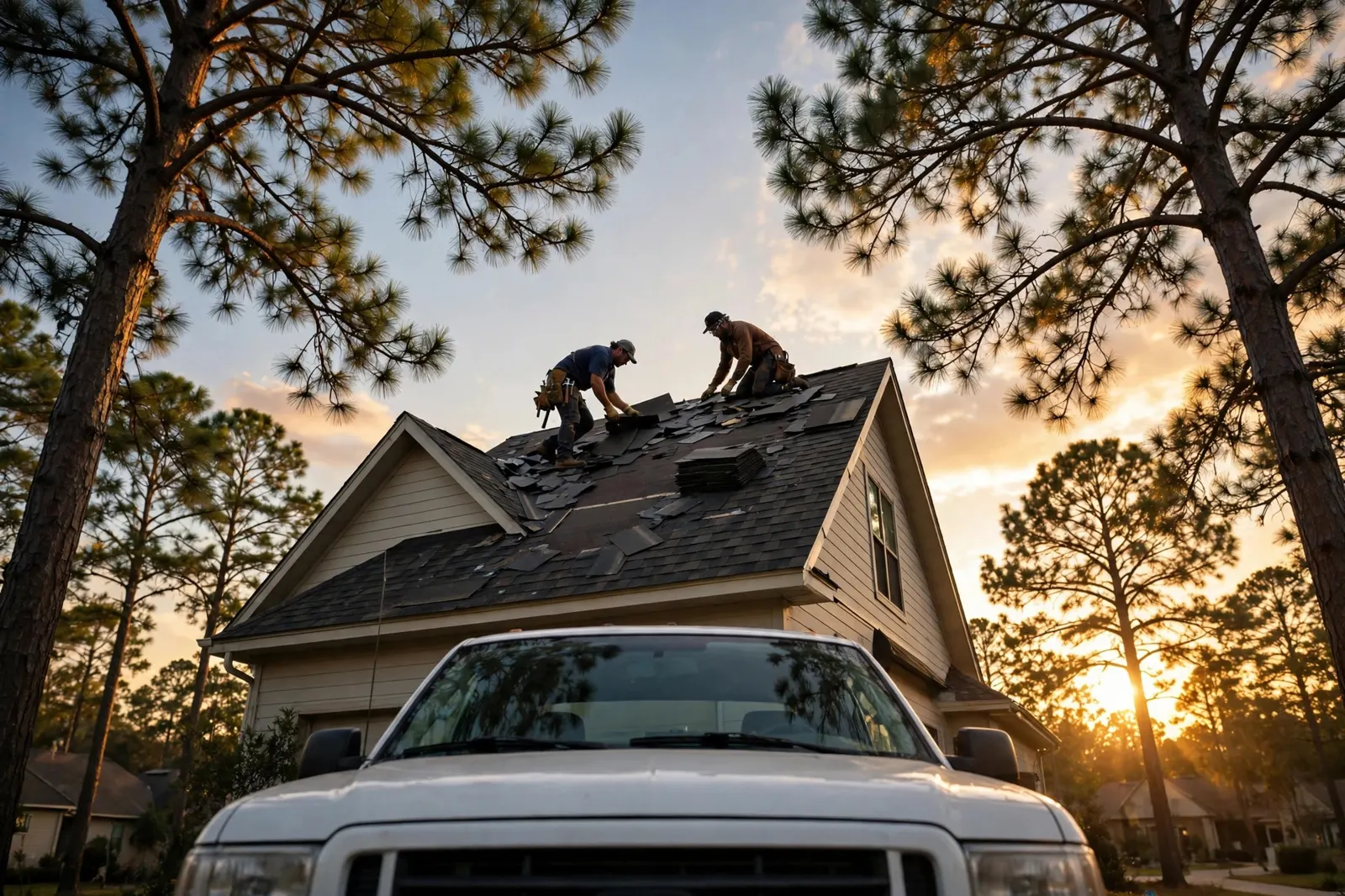
You call, describe what you are seeing, and we schedule a roof inspection. On site, we clear the debris from the work areas, inspect every slope, and photograph the damage, the flashing and the general condition of the roof, including the parts that are still healthy.
Then we walk through it with you. If it is a repair, we will show you exactly what failed and what the fix involves. If the roof is at end of life, we will show you that too, with the worn slopes photographed next to whatever life is left. You will never get a replacement pitch built on one close-up photo of the worst shingle on the house.
Approved work is done with matched materials where the roof allows it, the site is cleaned up, and the finished job is photographed. You keep the documentation. For homes under heavy canopy, we will also tell you honestly what a trimming and cleaning schedule would prevent, because the cheapest roof repair in Spring is usually a tree service and a cleaned valley.
Neighborhoods and Areas We Serve in Spring
We serve all of Spring, including Gleannloch Farms, Champion Forest, Cypresswood, Northampton, Auburn Lakes, Kleinwood, Olde Oaks, the Spring Creek corridor and Old Town Spring. North toward The Woodlands line and south toward FM 1960, along I-45, the Hardy Toll Road and Kuykendahl, it is all regular working territory for us.
We are based in nearby Tomball and cover Spring on our normal routes, the same way we cover Cypress. If your street is at the edge of the map, call and ask. We would rather tell you honestly than stretch a service area past where we can do the work well.
Keeping a Spring Roof Alive Longer
Under this canopy, maintenance is not cosmetic, it is the difference between a roof that reaches its full life and one that fails early on the shaded slopes. A few habits matter more here than anywhere else we work:
- Keep the valleys clear. Pine needles and oak leaves should not sit in valleys through a rainy season. A valley cleaned twice a year cannot dam water under your shingles.
- Trim limbs back off the roof. Branches should not touch or hang directly over the surface. Rubbing limbs strip granules, and every storm turns a low limb into a potential puncture.
- Watch the shaded slopes. Algae streaks are mostly appearance, but moss and lichen at shingle edges lift them over time. Treating growth early is far cheaper than replacing a lifted, leaking section later.
- Keep gutters flowing. In Spring, gutters fill with canopy debris fast, and overflowing gutters soak the roof edge and fascia, which is where rot starts.
- Get a look after any serious storm. Limb damage and lifted shingles are easy to miss from the ground and cheap to fix in the first weeks, before the next rain finds them.
None of this requires us. It requires a ladder, a blower and a calendar. But if you would rather have the inspection documented with photographs, that is exactly the visit we make.
Frequently Asked Questions
The leak is under a big oak. Is the tree the problem?
Often, partly. Shade keeps the slope damp, debris dams the valleys, and limbs damage shingles directly. The repair fixes the roof, but if the canopy keeps dropping branches and blankets of needles, the same spot will fail again. We will show you what the tree is doing to the roof and what trimming would change.
My Spring roof has been patched several times. Can it be repaired again?
Sometimes yes, if the base roof is still sound and the patches are the only failures. But layered patches on a worn-out roof stop being repairs and start being rent on a roof you will replace anyway. We will photograph the overall condition and tell you which side of that line your roof is on.
How much will a repair cost?
Common ranges for common jobs are in our roof repair cost guide. Your number depends on what we find on the roof: a failed vent boot and a limb-punctured section are very different jobs. We price the real work after seeing it, never from the driveway.
Do you work with insurance claims after storms?
We document storm damage with photographs and can meet your adjuster on the roof to walk through what we found. The claim itself is between you and your insurer, and we will never promise you an outcome. Call (281) 555-0100 if a storm has opened your roof up: stopping the water comes first.
 Tomball, TX
 Cypress, TX
Request a Roof Inspection
Tell us what the roof is doing and where. We call back with a plan and an honest read on cost before any work starts. Active leak or storm damage? Call (281) 555-0100 instead, a conversation beats a form when water is moving.
Request a Roof Inspection
Tell us what the roof is doing. We call back with a plan and an honest read on cost before any work starts.