Home › Services › Gutter Installation in Tomball, TX
Gutter Installation in Tomball, TX
A roof's job is only half done when the water reaches the eave. Where that water goes next decides whether it ends up in the yard or against your foundation, behind your fascia, and in your flower beds carving trenches. Gutter installation in Tomball TX matters more than it does in drier country, because our rain does not fall politely. Gulf downpours deliver inches in an hour, and a gutter system sized for gentle rain simply overflows and dumps the roof's whole harvest exactly where you least want it.
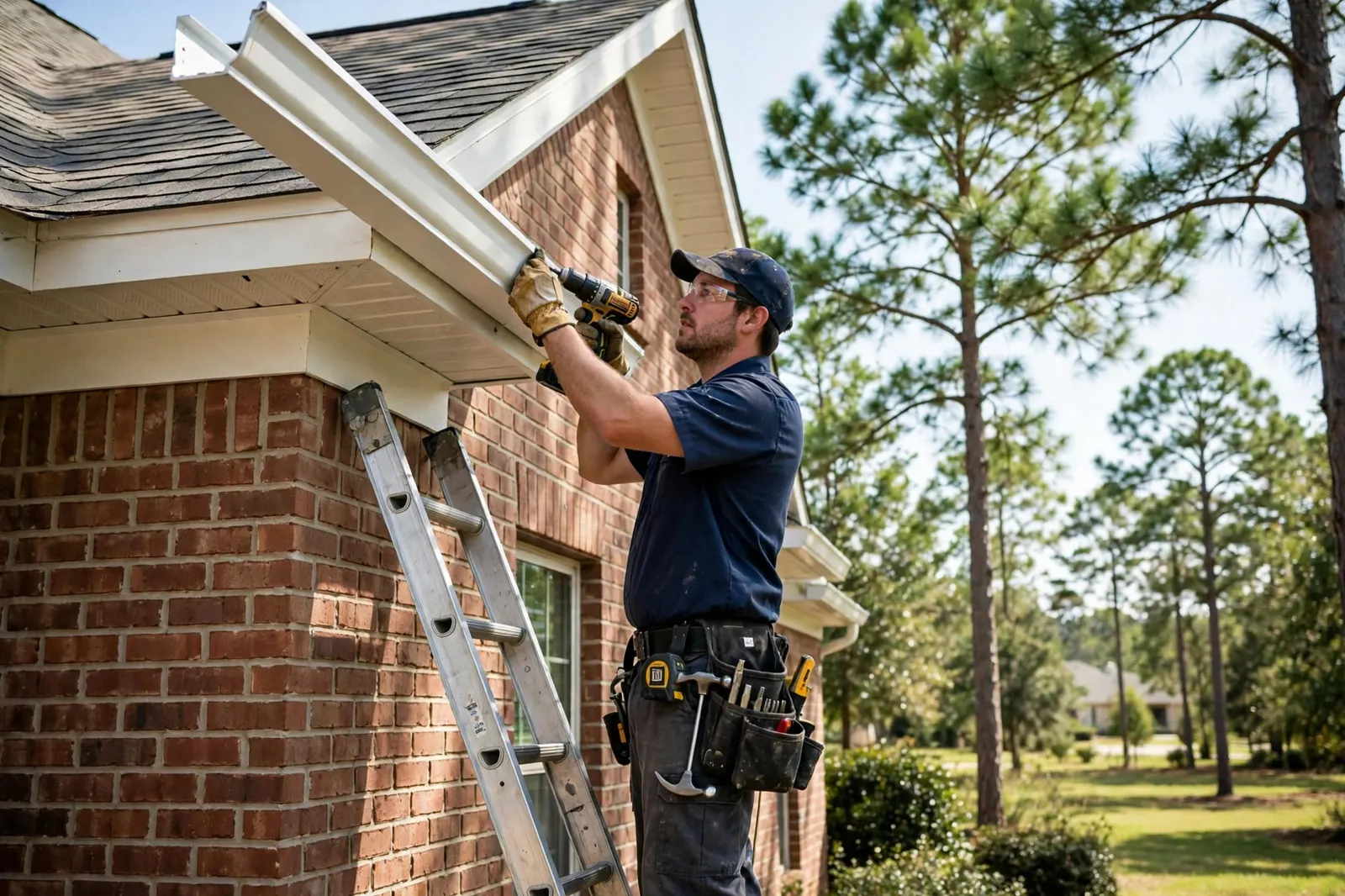
The Tomball drainage problem: too much water, too many pine needles
Our rainfall is heavy and arrives in bursts. A modest roof plane sheds an astonishing amount of water in a Gulf downpour, far more than standard builder-installed gutters were often sized to carry. Undersized five-inch gutters on a big two-story Cypress roof plane will overtop in the storms that matter most, which is precisely when the system is supposed to earn its keep. For most homes we install six-inch seamless gutters as the sensible standard: the extra capacity is cheap insurance against the heaviest hour of the year.
Then there is the debris load. Tomball is pine country, and pine needles are the perfect gutter clog: they fall year-round, mat together, and pack into downspout elbows like they were designed for it. Add oak leaves and the seed debris from Spring's canopy, and a gutter system here lives a harder life than the same system in a treeless suburb. That shapes our recommendations: generous downspouts, cleanouts where they help, and honest conversations about guards, below, rather than pretending debris does not exist.
Overflow is not a cosmetic issue. Water cascading over a clogged or undersized gutter soaks the fascia and soffit until they rot, stains and undermines siding, and pours a roof's worth of water against the foundation. In the Cypress Creek watershed, where Harvey put whole neighborhoods on notice about drainage in 2017, where your roof water goes is a serious part of protecting the house.
How we install gutters
Our gutters are seamless aluminum, formed on site to the exact length of each run, which eliminates the leaky joints that plague sectional gutters from a big-box store. We hang them with hidden hangers screwed into the fascia on close spacing rather than the old spike-and-ferrule method that works loose over time, and we set the pitch deliberately: a gutter that looks level but holds a quarter inch of standing water breeds mosquitoes and corrosion, while a correctly pitched run drains dry.
Downspouts are placed where the water should go, not merely where they are easy. That means thinking about your lot's drainage, your beds, your walkways, and where a downspout extension or a buried drain line earns its cost. We size downspouts to the gutter and the roof area they serve, and we add them rather than asking one downspout to drain a run it cannot handle.
Because installation often happens alongside roof work, we coordinate the details roofers understand: drip edge flashing into the gutter so water cannot curl behind it, and fascia inspected and repaired before new gutters are hung on it. Hanging new gutters on rotten fascia is a short-lived installation, and if we find rot we will show you and price the repair before proceeding. When gutters are part of a full roof replacement, the drainage plan gets designed with the roof rather than after it.
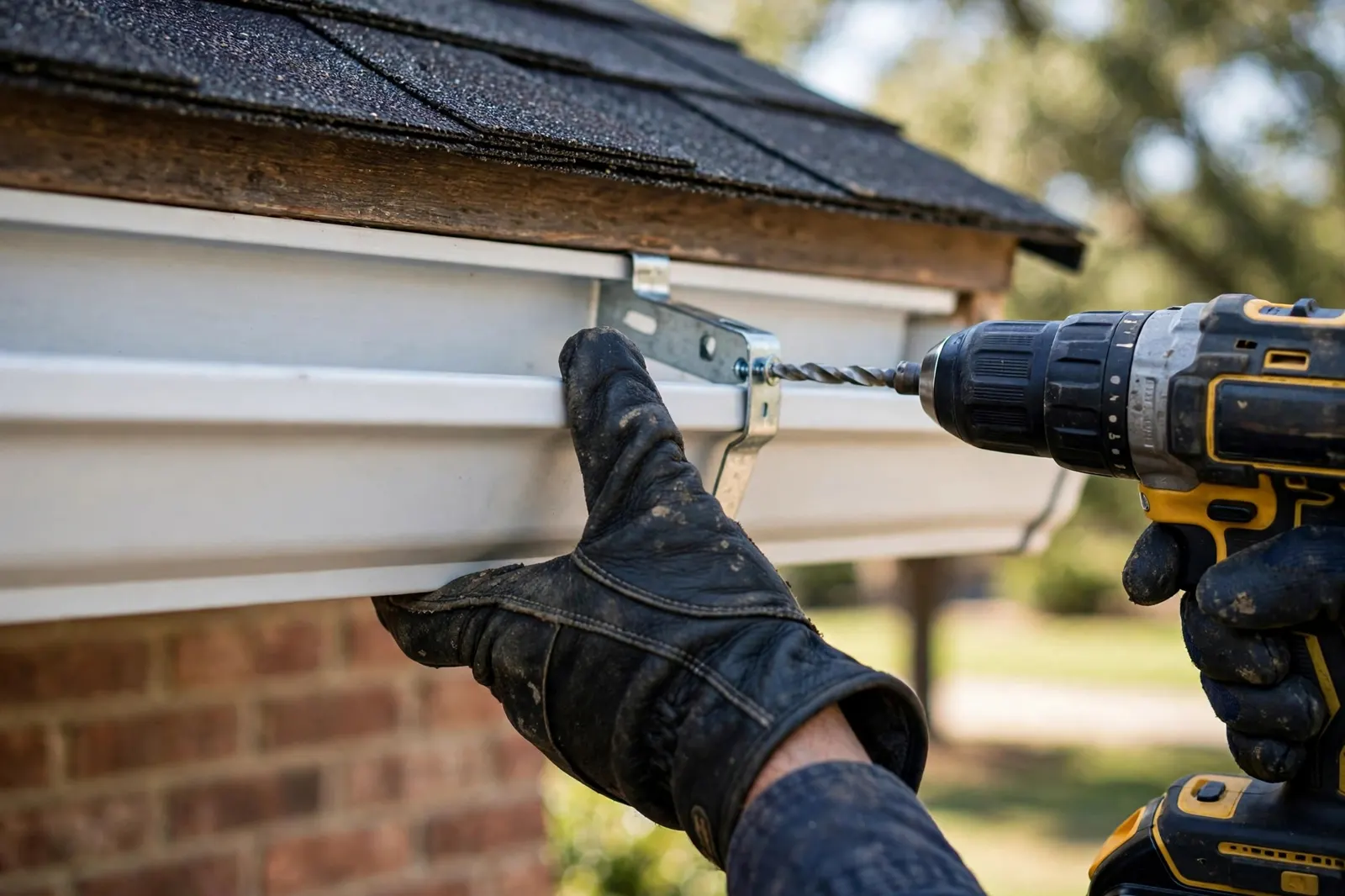
Gutter guards: the honest version
Guards reduce how often gutters need cleaning. No guard made eliminates it, whatever the brochure says, and pine needles are the hardest debris for any guard system to handle: fine screens can mat over with needles and shed water over the edge in a downpour, which defeats the purpose entirely.
For homes under light tree cover, a quality guard can be a genuine convenience. For homes under heavy pines, we often recommend well-sized gutters, accessible downspouts, and a realistic cleaning rhythm instead, and we will tell you which situation your house is in when we see it. What we will not do is sell an expensive guard system as a permanent cure to a homeowner whose roof sits under six pines. When a storm clogs things anyway, that gutters-and-drainage check is part of a full roof inspection, and standing water damage at the eave is something we look for on every roof repair call too.
Repair or replace your existing gutters
Not every bad gutter needs replacing. A run that has pulled loose can often be rehung with proper hangers and pitch. A single leaking corner can be resealed. We will make those calls honestly. Replacement earns its money when the system is undersized for the roof, when sections are rusted or crushed, when pitch was never right, or when the house has lived with overflow damage long enough that the fascia needs attention too. You will see photographs of what we found and a price before any commitment, and our roof repair cost guide gives a sense of local ranges for drainage work alongside roof work.
Frequently Asked Questions
What size gutters does a Tomball home actually need?
For most homes here, six-inch gutters are the right standard. Our downpours overwhelm five-inch systems on larger roof planes, and the cost difference is small compared to the overflow damage an undersized system allows. We size to your roof's actual drainage area rather than applying a one-size rule.
Do I still need to clean gutters with guards installed?
Yes, just less often, and anyone who tells you otherwise is selling. Guards slow debris accumulation, but pine needles and roof grit still build up, and guards themselves need checking so they do not shed water over the edge. Plan on periodic inspection either way; guards change the interval, not the obligation.
Can you install gutters without replacing my roof?
Absolutely. Gutter installation is standalone work we do on sound roofs every week. We will still look at the roof edge, drip edge and fascia while we are up there, because those components decide whether the new gutters perform, and we will flag anything we find with photographs rather than quietly working around it.
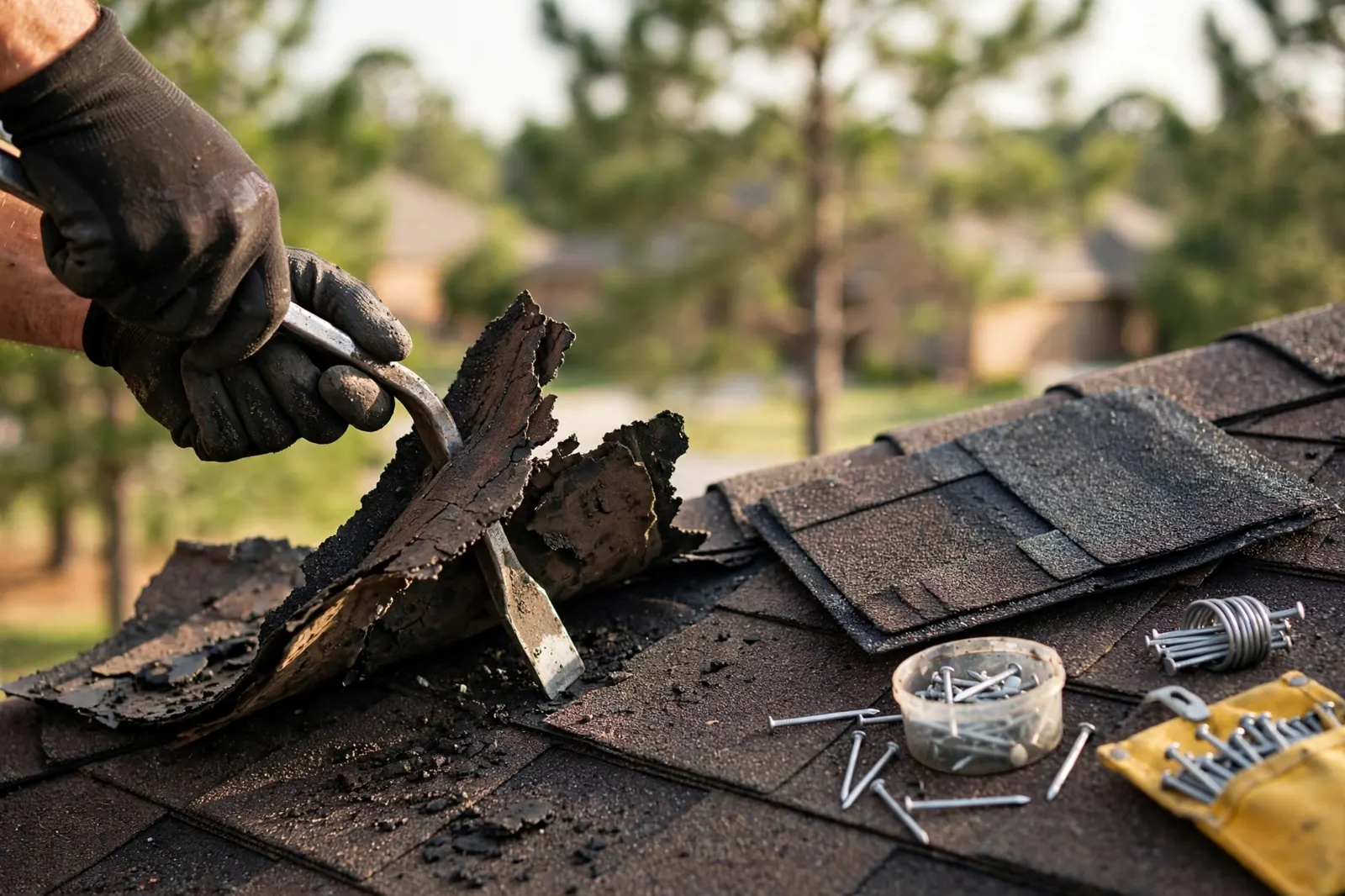 Roof Repair
 Roof Inspection
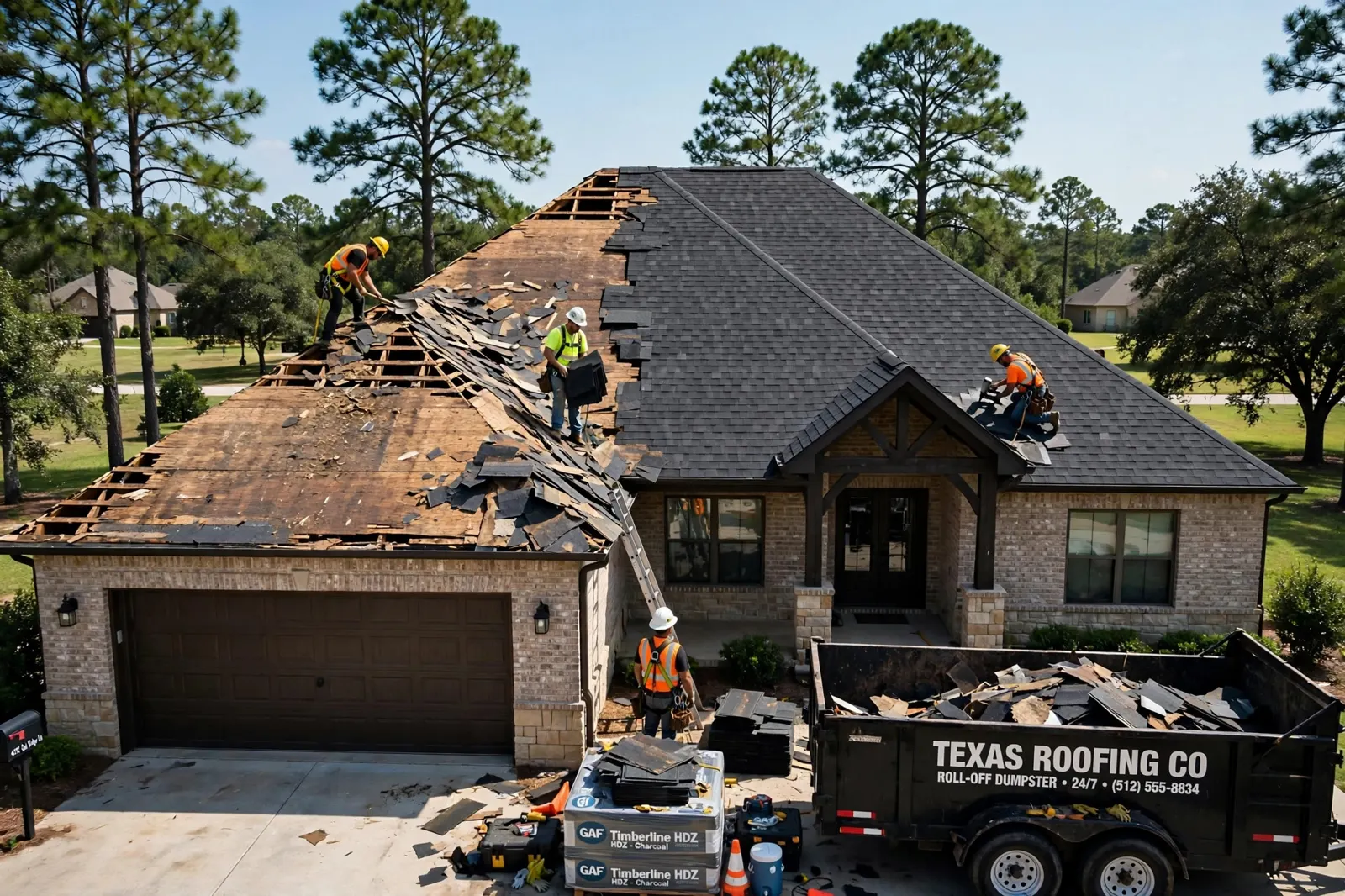 Roof Replacement
Request a Roof Inspection
Tell us what the roof is doing and where. We call back with a plan and an honest read on cost before any work starts. Active leak or storm damage? Call (281) 555-0100 instead, a conversation beats a form when water is moving.
Request a Roof Inspection
Tell us what the roof is doing. We call back with a plan and an honest read on cost before any work starts.